
The true cost of homeownership rarely stops at your monthly mortgage payment. For most property owners, the real financial test lies in ongoing upkeep and deferred maintenance. Ignoring minor wear and tear might save a few dollars this weekend, but it almost always leads to catastrophic repair costs down the road. Treating your property with proactive maintenance acts like a high-yield insurance policy. By committing to regular inspections and strategic micro-investments across your indoor systems, structural barriers, and outdoor amenities, you shield your savings from five-figure emergency overhauls.
Protecting your home on a budget does not mean cutting corners or settling for temporary fixes. It means knowing how your home systems operate, performing simple protective steps yourself, and recognizing when calling a skilled specialist will save you thousands in the long run. This comprehensive guide breaks down actionable, cost-effective strategies to preserve your primary investment from the roof overhead to the hardscape underfoot.
Roof, Attic, and Energy Envelope Optimization

Your home’s exterior shell and thermal layer form its first line of defense against the elements. When the energy envelope is compromised, your utility bills skyrocket, and structural framing becomes vulnerable to weather-induced decay. Protecting this boundary requires a dual focus on thermal regulation and moisture control.
Sealing Thermal Leaks and Regulating Indoor Climate
Conditioned air escaping through small gaps around your home is essentially money leaking out of your bank account. Drafts force your heating and cooling systems to run longer, shortening equipment lifespans and increasing monthly power expenses.
- Perform a DIY draft audit: Walk through your home on a windy or cold day with an incense stick or a lighted candle. Hold it near window frames, baseboards, electrical outlets, and attic hatches to identify air movement.
- Apply low-cost weatherization: Install foam gaskets behind light switch plates on exterior walls. Use silicone or acrylic caulk to seal cracks along window trim, and install durable door sweeps along drafty thresholds.
- Inspect insulation depth: Crawl into your attic to check the thickness of loose-fill or fiberglass insulation. If the insulation sits at or below the floor joists, your home is losing heat rapidly.
While blowing loose-fill insulation into accessible attic spaces can be a manageable project for an experienced hand, complex layouts, cathedral ceilings, and wall cavities require specialized equipment. Partnering with a certified home insulation contractor ensures that air sealing is completed safely alongside proper density installation, delivering maximal thermal resistance and lowering your monthly utility expenses for decades.
Defensive Moisture Barrier and Framing Inspection
Water is the single greatest threat to a home’s structural framing. Roof leaks rarely start as massive ceiling collapses; they begin as tiny trickles through cracked flashing or missing shingles that rot wood framing over many months.
- Check attic roof boards: Visit your attic during a heavy rainfall with a flashlight. Look for dark streaks, damp insulation, or water spots along the underside of the roof decking.
- Clear soffit vents: Ensure your attic intake vents remain free of dust, insulation batts, or bird nests. Balanced ventilation carries out damp air before it condenses on cold wood surfaces.
- Monitor structural timbers: Keep an eye on dark basement corners, crawl spaces, and subflooring for dampness or unusual discoloration.
If neglected moisture leads to fungal spores spreading across damp structural wood, swift intervention is critical. Bringing in a professional specializing in mold remediation ensures that wood-destroying organisms are safely contained and eradicated, protecting both your structural framing and indoor air quality before severe rot requires full structural framing replacement.
Primary Interior Upgrades and Fixture Care
Indoor plumbing fixtures and wet rooms experience constant daily wear. A disciplined approach to internal system care prevents costly emergency plumbing calls while keeping water usage lean.
Extending Plumbing Lifespans and Improving Tap Quality
High water pressure and mineral-heavy municipal water quality destroy internal valves, pipe joints, and expensive home appliances. Preserving plumbing infrastructure requires regulating what flows through your pipes.
- Flush water heaters annually: Sediment buildup at the bottom of tank heaters creates an insulating layer that slows heat transfer and causes tank bottoms to overheat and fail prematurely. Attach a garden hose to the drain valve and flush several gallons into a bucket until the water runs clear.
- Check water pressure: Screw a cheap pressure gauge onto an outside hose spigot. If water pressure exceeds 80 PSI, install or replace a pressure-reducing valve to save your pipe joints and appliances from premature failure.
- Test shutoff valves: Turn individual fixture shutoff valves under sinks and toilets twice a year to prevent them from seizing due to corrosion.
Hard water filled with heavy minerals corrodes internal valve cartridges and leaves stubborn scale buildup inside your plumbing lines. Installing a home water filtration system filters out damaging minerals and chemical additives before they reach your fixtures, protecting your plumbing infrastructure while eliminating the ongoing expense of buying bottled drinking water.
High-Impact Wet-Room Refreshes on a Budget
Bathrooms are ground zero for water damage. A failed line under a sink or a cracked seal around a tub can quietly rot subfloors, ceiling joists, and wall studs long before damage shows up on drywall.
- Recaulk tub and shower seams: Remove old, cracking caulk around tubs and sinks using a utility knife. Clean the joint with rubbing alcohol and apply a clean bead of 100% silicone caulk to block water from seeping behind tile walls.
- Inspect toilet seals: Check around the base of your toilets for soft flooring or moisture. A loose toilet can ruin subfloors over time; replacing a worn wax ring costs very little and takes under an hour.
- Update fixtures strategically: Swapping out outdated faucets, showerheads, and cabinet hardware refreshes a bathroom instantly at a fraction of the cost of a full remodel.
When fixtures are hopelessly outdated, or original tile enclosures begin to fail, complete demolition is rarely necessary. Working with an experienced bath remodeling company allows you to explore budget-friendly alternatives like acrylic tub liners, tile resurfacing, or vanity updates, giving you a fresh, clean space while preserving structural elements.
Protecting Perimeter Entry Points and Building Seals

Your doors, windows, and exterior openings buffer your living space from storm winds, torrential rains, and summer heat. Keeping these access points well-maintained keeps your indoor spaces comfortable and protects exterior framing.
Preserving Glazing and Restoring Natural Light
Window assemblies involve a delicate balance. Between glass panes, weatherstripping, and drainage tracks, small neglects can quickly lead to failed seals, rotten sills, and foggy glass.
- Keep weep holes open: Inspect the bottom metal or vinyl tracks of sliding windows. Clean out dirt and debris from the tiny weep holes that drain rainwater away from window frames.
- Inspect frame caulking: Examine the exterior perimeter of window frames where casing meets siding. Fill cracks with exterior-grade caulk to keep wind and driven rain out of wall cavities.
- Clean track mechanisms: Vacuum window tracks and spray sash rollers with dry silicone lubricant to prevent binding and frame damage.
Multi-story windows and high glass panels present clear safety hazards for basic maintenance. Hiring a professional window cleaning service gives you a clear view while providing an expert set of eyes to spot failing exterior seals, damaged flashing, or failing glass units before water leaks cause structural wood rot.
Entryway Upgrades and Mechanical Door Safety
Exterior entryways endure continuous physical use alongside weather exposure. Simple maintenance prevents heavy door assemblies from shifting out of alignment and destroying weather seals.
- Tighten hinge screws: Over time, heavy entry doors sag and rub against door frames, tearing up weatherstripping. Replace standard top-hinge screws with three-inch screws anchored directly into the wall framing studs.
- Lubricate overhead hardware: Treat garage door rollers, hinges, and springs with a dedicated garage door lubricant twice a year. Avoid heavy grease, which attracts grit that accelerates mechanical wear.
- Adjust latch plates: File down latch plate openings if doors do not latch tightly, keeping seals snug against cold winds.
When an entry door is swollen, warped, or compromised by rot, attempting quick fixes often wastes money. Investing in a professional door installation ensures proper alignment, flashing, and weather-sealing, preventing water from intruding behind framing casing. Similarly, when massive overhead garage doors vibrate excessively or fail to open smoothly due to fatigued spring mechanisms, securing professional garage door replacements protects your home from structural strain while keeping your household safe from high-tension spring accidents.
Extending the Life of Exterior Hardscapes and Pool Amenities
Your home’s surrounding property requires the same proactive care as its interior spaces. Hardscapes, driveways, and outdoor recreational features represent significant investments that decay rapidly when neglected.
Masonry Protection and Ground Drainage Controls
Water pooling near concrete paths, driveways, or your foundation can cause settling, severe cracking, and basement flooding. Managing surface drainage preserves expensive exterior stonework.
- Extend downspout outlets: Ensure downspouts drop water at least five to six feet away from foundation walls using rigid piping or pop-up emitters.
- Seal concrete cracks: Clean out weeds and debris from cracks in driveways and walkways, then fill them with self-leveling masonry sealant to prevent winter freeze-thaw damage from widening the gaps.
- Regrade perimeter soil: Slope garden beds and lawn soil away from the foundation at a rate of six inches of fall over the first ten feet.
If your property features heavily trafficked dirt pathways or eroded entry points, adding durable ground covers becomes necessary. Arranging a professional paver installation creates an attractive, durable surface that routes rainwater runoff safely away from your foundation walls while adding usable outdoor space that boosts property value.
Sustainable Care for Backyard Water Features
In-ground pools and water features are luxurious amenities, but poor maintenance transforms them into massive financial liabilities. Keeping pool systems operating smoothly prevents early equipment failure.
- Balance water chemistry weekly: Improper pH and alkalinity ruin pool surfaces and corrode internal pump components, heater cores, and ladder mounts. Keep chemicals balanced to prolong system life.
- Clean skimmer and pump baskets: Empty debris from pump baskets daily to relieve strain on electric motors and keep water circulation efficient.
- Inspect tile lines: Scale buildup along waterlines degrades grout joints. Scrub pool waterlines with non-abrasive cleaners to keep water from penetrating behind tiles.
When aging pools show signs of structural cracks or flaking finish coats, simple chemical adjustments are no longer enough. Consulting a certified custom pool builder offers insights into system modernizations, equipment retrofits, and energy-efficient pump upgrades. If the pool shell surface has become rough and porous, investing in professional pool resurfacing restores structural integrity, stops hidden water leaks, and eliminates rough surfaces that wear out pumps and vacuum gear.
Creating a Sustainable Seasonal Maintenance Schedule
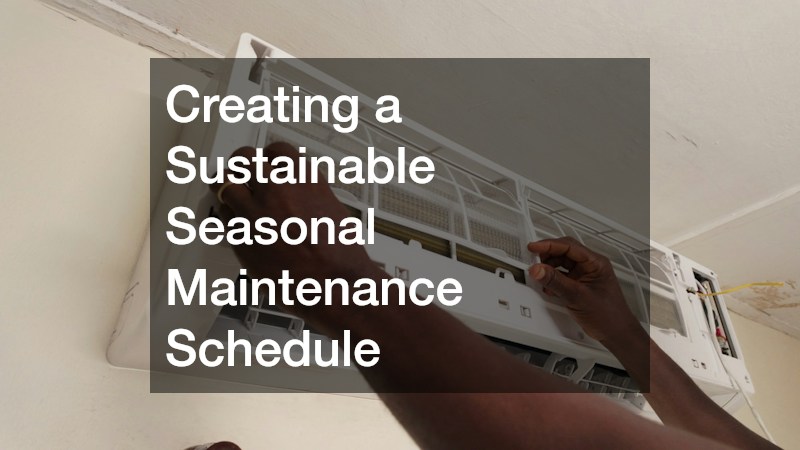
To keep home maintenance manageable and budget-friendly, organize tasks into a seasonal schedule. Spreading projects across the year prevents burnout and keeps minor repairs from piling up into overwhelming overhauls.
Spring and Summer Maintenance Focus
Spring is all about recovering from winter weather and preparing for high temperatures.
- Clean gutters and downspouts: Remove leaves and organic buildup from gutters to ensure free water flow during heavy spring thunderstorms.
- Service cooling systems: Replace air filters, clear brush away from exterior AC condenser units, and flush condensate drain lines with white vinegar.
- Inspect exterior masonry: Examine patios, steps, and retaining walls for shift or crack development caused by winter freeze-thaw cycles.
- Prepare outdoor amenities: Check pool pump seals, inspect pressure gauges, and run water lines through pressure checks before summer usage spikes.
Fall and Winter Maintenance Focus
Fall focuses on sealing your energy envelope and guarding against frozen pipes.
- Disconnect hose bibs: Remove garden hoses from exterior spigots before freezing weather hits to prevent trapped water from bursting interior pipes.
- Inspect heating equipment: Swap furnace filters, schedule an annual burner checkup, and clean fireplace flues before heavy seasonal use.
- Clear roof valleys: Sweep away accumulated pine needles and leaves from roof valleys to prevent ice dams and moisture backup.
- Check safety devices: Test smoke detectors, carbon monoxide alarms, and fire extinguishers throughout the house, replacing batteries as needed.
Using This Guide to Maintain Your Home
Budget-friendly home care isn’t about doing everything yourself or choosing the cheapest option. True frugality comes down to smart resource management: doing simple preventive maintenance on schedule, watching for early warning signs of wear, and bringing in skilled professionals for specialized upgrades before minor issues become structural disasters.
By optimizing your thermal envelope, caring for interior plumbing fixtures, maintaining exterior entry seals, and protecting outdoor hardscapes, you preserve your property’s value while keeping monthly living costs low. Treat your house with consistent, proactive attention today, and it will remain a safe, comfortable, and financially secure sanctuary for decades to come.